Anxiovita Effectiveness What Recent Reviews Say in 2026
When you are dealing with anxiety, you do not just want “hope.” You want something you can feel in your day. Watch this video review of Anxiovita, with supporting context, key considerations…
When you are dealing with anxiety, you do not just want “hope.” You want something you can feel in your day. That is why questions like does Anxiovita work keep showing up in real conversations with people who are tired of cycling through strategies that sound good in theory.
In 2026, the chatter around Anxiovita effectiveness has a specific flavor. It is less about dramatic promises and more about lived, measurable changes, especially the kind that show up in patterns: how quickly the body settles after a stress spike, whether sleep feels less guarded, and whether worry stops stealing time from ordinary tasks.
I am not going to pretend reviews are scientific proof. But they can be a useful mirror. They often reveal what people actually notice, what they expected, what surprised them, and what they think is missing.
What “Effectiveness” Looks Like in Real Reviews
Most reviews describing real results from Anxiovita do not focus on one magical moment. They focus on gradual shifts, and specifically on emotional health outcomes that anxiety tends to distort.
From what people report in 2026, effectiveness usually shows up in a few concrete ways:
- Less frequent anxiety surges: People mention fewer “waves” that pull them away from work, conversations, or downtime.
- Faster recovery after triggers: Instead of spiraling for hours, some reviewers describe a shorter window to return to baseline.
- Improved sleep quality: Not always “knockout sleep,” but more restful nights and fewer wake ups driven by worry.
- More emotional steadiness: Reviewers often describe feeling more able to handle unpleasant feelings without adding a second layer of panic.
- Better daily functioning: The goal is not to feel nothing, it is to keep living. Many notes mention tasks becoming easier to start and stick with.
The emotional health angle matters here. Anxiety is not only a thought problem, it is a body problem. Reviewers who feel helped usually describe a reduction in the “wired” feeling, the edge that makes normal decisions feel risky.
Still, I also see an important theme in 2026 reviews: expectations. People sometimes expect immediate calm, and when that does not arrive quickly, they interpret the delay as failure. Reviews that feel most credible often include a timeline, even if it is not exact.
If you are reading reviews to decide whether Anxiovita is worth trying, pay attention to the language. “Felt something” is different from “I became unbothered.” Emotional health products tend to be more realistic when they change reactivity first, then consistency.
A Note on Variability
Not everyone reports the same outcome. Some people are managing anxiety that is triggered by specific life stressors, while others describe a more persistent baseline. Those differences show up in reviews.
Also, the way people use Anxiovita seems to influence satisfaction in 2026. Reviewers who are consistent about taking it as directed tend to sound clearer and more confident about the outcome they noticed. Reviewers who change routines, skip doses, or mix multiple new supplements at once often end up with fuzzy impressions that are harder to interpret.
That does not mean you have to be rigid. It does mean that if you want to know whether Anxiovita is helping, you need enough stability to notice what is actually changing.
What People Say About Timing and “Anxiovita Anxiety Relief Study” Style Expectations
You will see the phrase Anxiovita anxiety relief study used as shorthand in some review discussions, even when people are not referencing a specific paper. What that points to is a desire for clarity: How long until you feel it? What should you measure? What counts as progress?
In 2026, many reviewers describe their timeline in terms of emotional markers rather than physical ones. They track things like:
- How quickly they can come back down after an anxious thought
- Whether their mind stops rehearsing worst case scenarios
- Whether they feel safer entering situations that previously triggered fear
In practice, the “right” timeline is individual. Anxiety has an underlying rhythm, and your nervous system adapts. Some people feel noticeable changes sooner, especially if their anxiety is mild to moderate or closely linked to daily stress. Others describe slower improvement that becomes obvious only when they compare weeks, not days.
A realistic approach is to think in phases rather than single points. Many people in 2026 reviews describe:
Phase 1: Noticing Changes Without Calling It “Calm”
This is where you might realize you are still anxious, but the anxiety has less grip. You can redirect attention with less effort. You can pause before reacting.
Phase 2: Fewer Setbacks That Snowball
This is where anxiety relief feels more functional. Triggers still happen, but the spiral is smaller. You recover instead of re-ascending the same hill.
Phase 3: Steadier Baseline
This is the part people care about most for emotional health. It is the difference between “I got through the day” and “the day did not hijack me.”
If you are hoping for instant relief, it helps to read reviews with that lens. The most reassuring stories often sound like, “It did not erase anxiety, but it changed how long it lasted.” That is a meaningful form of emotional health improvement.
Where Reviews Agree, and Where They Do Not
In 2026, the strongest overlap across reviews is not about perfection. It is about reduced intensity and improved manageability. People often say their anxiety feels less like an emergency and more like a signal they can respond to.
But disagreements matter too, because they highlight the edge cases you should consider.
Here are the patterns that frequently show up when reviewers talk about Anxiovita effectiveness reviews in a way that feels honest:
Agreement - People report better emotional control, even if anxiety remains present. - Sleep-related observations are common, though not universal. - Product experiences tend to improve with consistency.
Disagreement - Some people expect dramatic calm and feel disappointed if they do not get it. - Others report no noticeable difference or a very subtle effect, which can be discouraging. - A portion of reviewers describe changes that overlap with other habits they started at the same time, making it hard to separate what helped.
A practical takeaway for emotional health: if you are using Anxiovita and also changed your caffeine intake, began therapy, started a new sleep routine, or adjusted medication, your experience can be real but not uniquely attributable. That does not make it false. It just means you may be observing a bundle of improvements, not one lever.
That is also why reading only five-star reviews can mislead you. Look for reviewers who mention their starting point, their routines, and what they were trying to fix. The most useful reviews tend to sound like they are describing cause and effect, not trying to sell certainty.
How to Use Reviews to Decide If Anxiovita Fits Your Emotional Health Needs
If you are trying to figure out whether Anxiovita is worth your time, the question is not just “Does Anxiovita work?” It is “Does this kind of emotional shift match what I need right now?”
In 2026, reviewers who seem most satisfied often describe a problem that is specific enough to respond. Their anxiety is not random chaos. It is a pattern. Maybe it hits during transitions, before social events, or when they lie down and their mind starts scanning for danger.
One thing I recommend when reading real results from Anxiovita experiences is to map the review to your own anxiety pattern. Ask yourself:
- Are your biggest struggles emotional, physical, or both?
- Do you need faster recovery, or are you mainly trying to reduce baseline worry?
- Would “less intense but still present” feel like a win for you, or do you only accept full relief?
If a review emphasizes a reduction in anxiety waves, that might fit you even if you still feel tension. If a review focuses on sleep quality, that might be more relevant if bedtime anxiety is your main villain. If a review sounds like it helped mainly with emotional steadiness, that might be what you are actually seeking, especially for people who are tired of overreacting to stress.
Finally, consider how patient you can be. Emotional health improvements often show up as steadier days rather than a sudden transformation. Reviews that reflect steady progress are often more trustworthy than those describing immediate and permanent change.
If you are going to try Anxiovita, do it with the mindset that you are testing fit, not chasing perfection.
What to Look for in Anxiovita Effectiveness as You Track Your Own Response in 2026
You do not need fancy tools. You need honest tracking. A lot of people abandon emotional health experiments too early because they are measuring the wrong thing or they are judging too quickly.
In 2026, I see reviewers doing better when they track simple signals tied to anxiety and functioning. A good tracking approach looks like this, especially if your goal is anxiety relief:
- Choose one emotional marker: recovery time after a trigger, or the heaviness of worry at night
- Note it at the same time daily: morning for baseline, evening for anxiety intensity
- Record sleep basics without overthinking: how rested you felt, how often you woke due to worry
- Track one behavioral outcome: ability to start a task you usually postpone, or staying present in a conversation
- Keep everything else steady for a short window: so you can actually interpret change
This kind of tracking helps you see whether Anxiovita is supporting emotional health in the way reviews often describe: less grip, faster recovery, steadier days.
And if you are skeptical, that skepticism is healthy. Anxiety makes people desperate, and desperation can distort judgment. Still, reviews can be a starting point. If the experiences you read sound like your reality, and the progress aligns with what you need, then Anxiovita may be worth a careful, consistent trial.
Whether it delivers for you depends on your baseline anxiety, your routines, and your expectations. But in 2026, the most compelling review stories are not the ones promising a miracle. They are the ones showing a more workable relationship with anxiety, one day at a time.
Related video pages
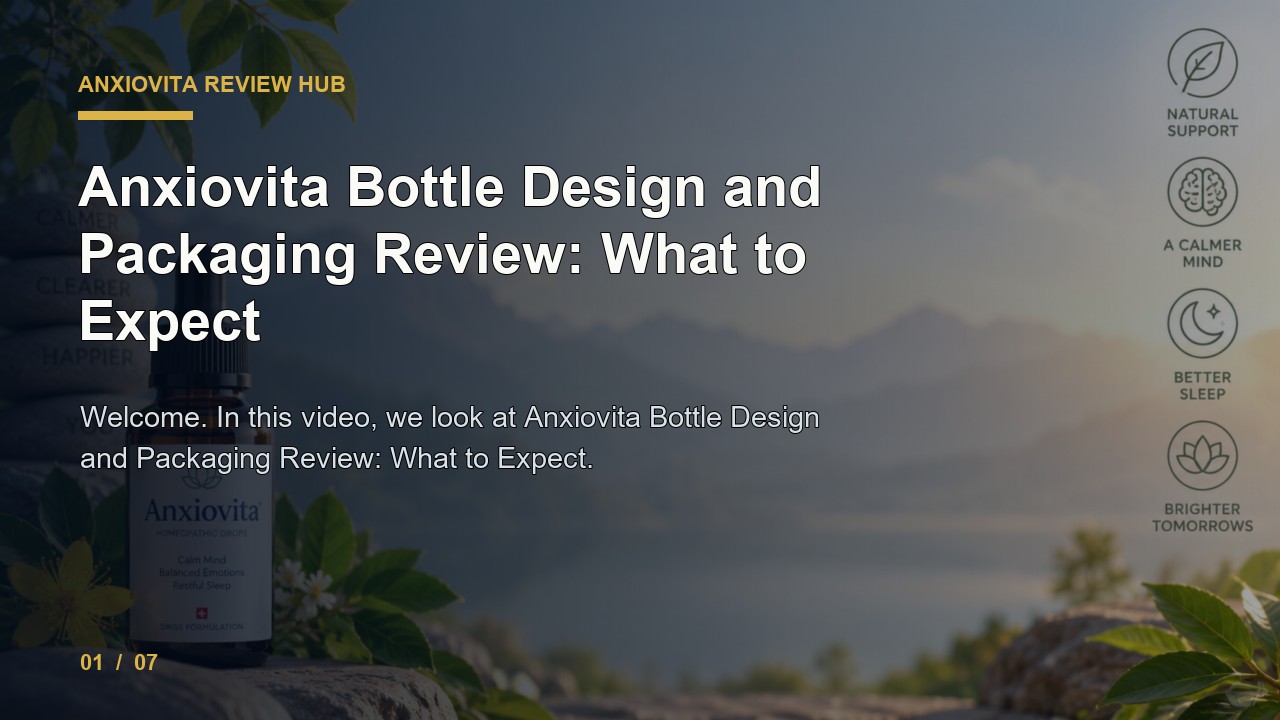 2:13Anxiovita Bottle Design and Packaging Review What to Expect
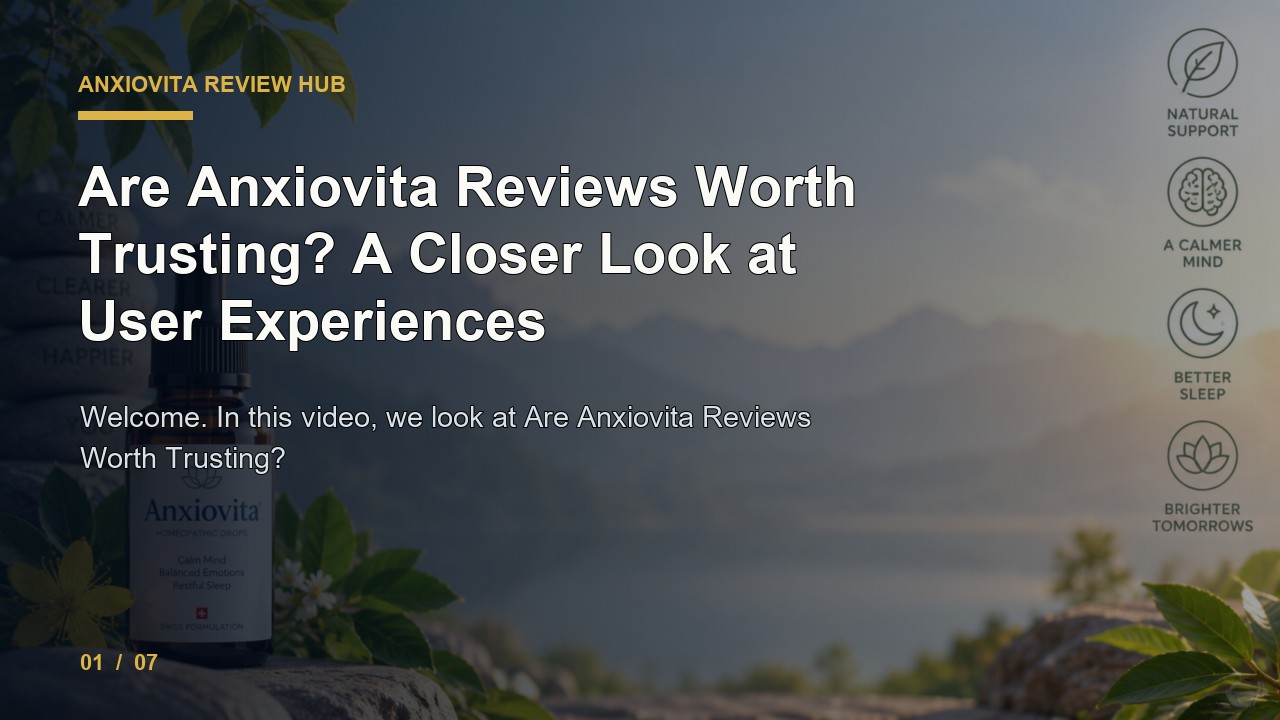 2:46Are Anxiovita Reviews Worth Trusting a Closer Look at User Experiences
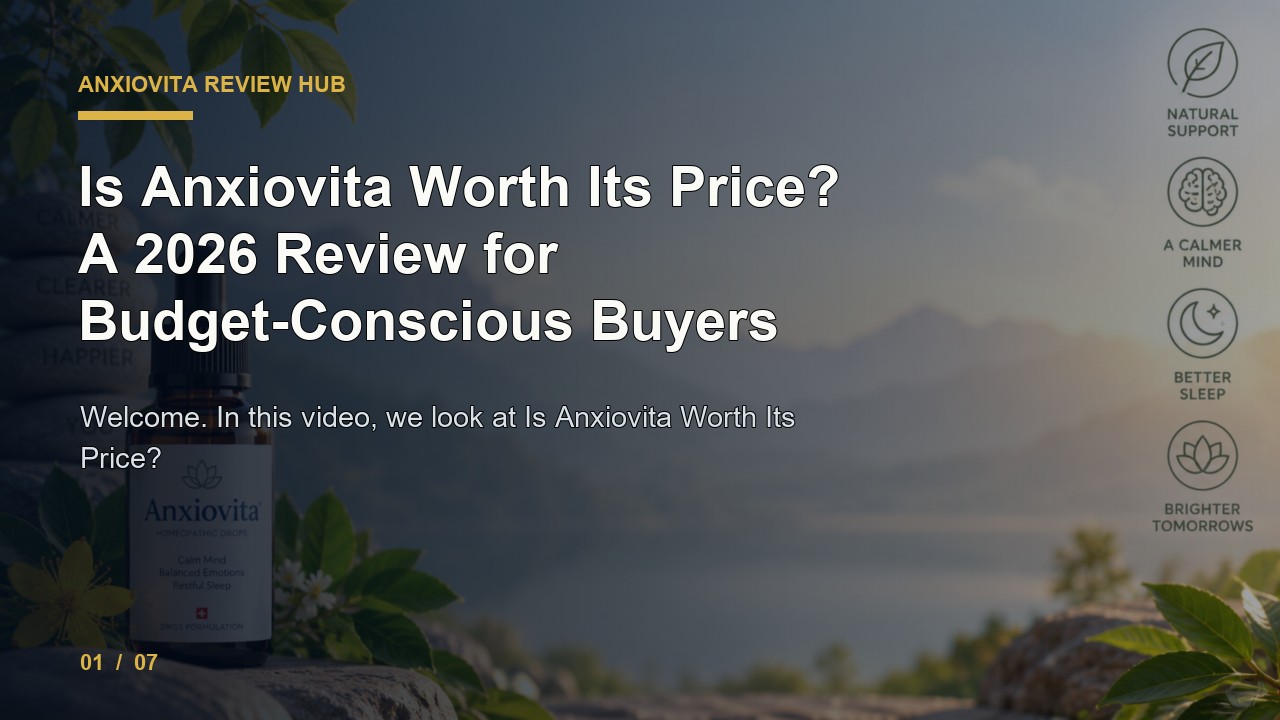 2:35Is Anxiovita Worth Its Price a 2026 Review for Budget Conscious Buyers
 2:30Is Anxiovita Worth It for Anxiety Caused by Stress an Honest Review
 2:29Anxiovita Review How It Compares to Other Homeopathic Anxiety Solutions
 2:40Calm Mind Supplement Review Top Products for Mental Clarity and Relaxation