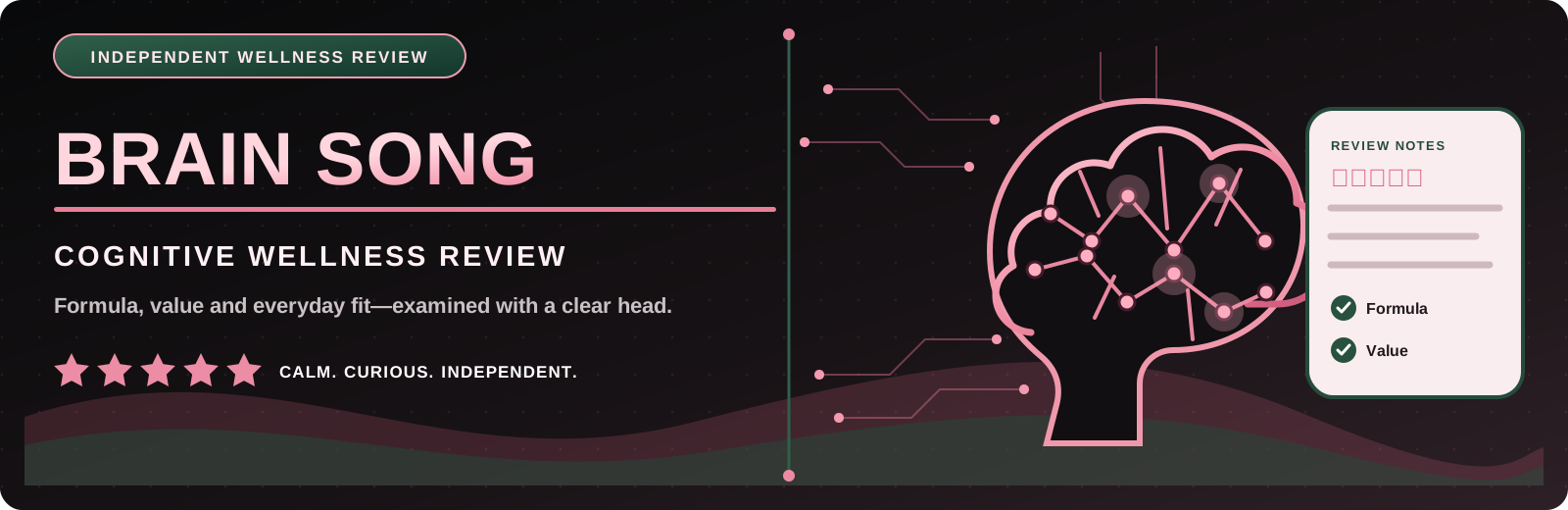
The Brain Song Review: A 17 Minute Brainwave Audio Program for Busy Minds
The morning rush used to feel like a freight train, and by the time I sat down with a work task, my brain seemed to be running on filler words rather than focused…
A 17 Minute Brainwave Audio Program for Busy Minds
The morning rush used to feel like a freight train, and by the time I sat down with a work task, my brain seemed to be running on filler words rather than focused thought. Then I tried something different: a 17 minute brainwave audio program designed for busy minds. Not a magic cure, but a practical tool that fits into a frantic day and gives the brain a targeted nudge toward clarity, memory, and sharper focus. My aim here is to share what I’ve learned from real-world use, including how it feels, what it actually does, and where the trade-offs show up.
What brainwave entrainment is really doing for memory and attention
At its core, brainwave entrainment relies on synchronized neural rhythms. The idea is simple on paper: expose your brain to rhythmic stimuli—usually a mix of binaural beats and gentle tones—so that your brain can lock onto a pattern that supports certain cognitive states. In practice, the results vary from person to person, and the science sits in a gray area between objective measurements and subjective experience. What I’ve found consistently helpful is a workflow that treats the 17 minute session as a short, repeatable habit rather than a one-off performance boost.
Some listeners report that gamma frequency audio sections feel especially potent for moments requiring heightened focus, fast idea generation, or rapid decision making. Gamma rhythms are associated in the literature with active information processing and memory binding, which makes the concept appealing for quick study sprints or dense work blocks. Others lean into the idea of BD N F sound therapy programs as a catalyst for neurotrophic activity—basically, the brain's growth factor chemistry that supports learning and memory over time. It's not a silver bullet, but it can complement a rigorous routine that already includes sleep discipline, deliberate practice, and healthy stress management.
What to expect in a 17 minute session
Timing matters. A well-constructed 17 minute session usually starts with a warm-up phase that eases you into the cadence, then carries through a steady rhythm that nudges attention toward a narrow target, and finally lands softly in a cool-down that helps you're-enter the next task without a jarring shift. The most practical way to gauge value is to pair the session with tasks that require mental concentration, like editing a draft, compiling data, or sketching a plan. The changes you notice won't always be dramatic, but the cumulative effect tends to show up as fewer mental detours, quicker transitions between subtasks, and a more reliable sense of mental currency.
When I’ve used the program before a focused work block, I felt a slight tilt toward mental clarity within the first few minutes. The brain often feels more anchored, less scattershot. Afterward, the transition to the next task is smoother, almost like the mind has a clearer lane to drive in. It's not universal magic, but it's a welcome nudge that makes existing routines more effective.
The two sides of the trade-off
No tool exists in a vacuum, especially when we’re weighing cognitive enhancement devices against busy schedules. A 17 minute brainwave audio program can slide into your day with minimal friction, but there are real trade-offs to be mindful of.
First, it's essential to manage expectations. Some days, the session will feel like a quiet catalyst, while on others you might notice only a mild difference. If you chase a guaranteed surge in memory or an instant spike in output, you’ll likely be disappointed. On the flip side, if you treat it as a consistent, low-effort augment to your routine, the payoff compounds—much like a micro-habit that strengthens cognitive pathways through repetition.
Second, individual differences matter a great deal. People with contrasting sleep cycles, caffeine patterns, or stress levels can experience the effects differently. If you’re dealing with anxiety or insomnia, the same tones that help some may feel jangly to others. In those cases, tweaking the listening environment—volume, headphone type, or the time of day—can make all the difference.
A practical way to integrate into a workday
If you’re contemplating adding this to your routine, here's a straightforward approach that respects time constraints and keeps the experience grounded:
- Pick a consistent time window, ideally a moment when you’re not rushed to deliver results. A calm break after lunch or a short window after a commute often works well.
- Use a dimly lit, comfortable space with minimal distractions. A quiet room, or a corner with a familiar setup, makes it easier to settle into the rhythm.
- Start with a 17 minute session, then observe how you feel, note any shifts in focus, and plan the next task with that data in mind.
- Pair the session with a concrete objective. For example, “rewrite the intro because I'm clear on the argument,” or “map out three key points for the next section.”
- Be consistent for at least two weeks. The brain responds best to repeated patterns rather than sporadic use.
What to listen for and what to watch out for
Within a few sessions, you may notice a few recurrent signals. Some people describe a sense of steadiness in attention, a smoother transition between thoughts, or a feeling of mental lightness during work. Others report brief moments of heightened awareness, like catching a missing piece of logic more quickly or spotting an overlooked connection in a dataset. If you’re sensitive to audio stimuli, you might notice occasional changes in mood or energy levels—these shifts tend to be short and settle as your brain adapts.
There are also legitimate caveats. If you notice persistent headaches, discomfort, or sleep disruption after using a program, it's wise to pause and reassess timing, volume, or even the decision to continue. Not every method suits every schedule or temperament. In such cases, returning to a slower, more paced approach with simple breathing or a brief mindfulness practice can be a more reliable route.
A candid look at the broader landscape
People sometimes ask whether gamma frequency audio or BD N F targeted therapies are a substitute for solid study habits. They aren't. They function best as allies to a disciplined approach that includes adequate sleep, regular breaks, and deliberate practice. The true test lies in consistency over weeks, not in a single brilliant afternoon. If you’re curious about long-term benefits, consider the potential cumulative effects on neuroplasticity and memory as one piece of a broader cognitive enhancement strategy.
Two practical takeaways
- A 17 minute session can be a nimble, repeatable habit that supports mental clarity during busy days. The key is consistency, not intensity on any given day.
- Pair the audio program with tangible work tasks and a simple after-action review. Track whether you felt more focused, whether tasks flowed more smoothly, and whether the next steps felt clearer.
If you’re considering exploring this kind of tool, approach it with curiosity and a grounded plan. It can be a welcome addition to a well-rounded routine that treats brain health as an ongoing project rather than a one-time fix. The real value emerges when you blend an evidence-informed practice with real-world discipline, and when you keep your expectations honest, practical, and focused on measurable daily gains.
Related video pages
 0:24The Brain Song Review: Brain Derived Neurotrophic Factor Benefits a Deep Dive
 0:23The Brain Song Review: Sound Comfort Level How Relaxing Are Binaural Beats
 0:22The Brain Song Review: Bdnf Research Studies You Should Know About
 2:14The Brain Song Review: Daily Mental Performance Routine Small Wins Big Gains
 0:23The Brain Song Review: Focus Music for Deep Work a 60 Minute Routine
 2:57The Brain Song Review: What Is Bdnf and Why It Matters for Your Brain